- Home Page /
- Electronics /
- Computer Accessories /
- Computer Components /
- Single Board Computers /
- Digital Light Sensor for Arduino, ESP32, ESP8...
0 ratings






Item #:
209872817
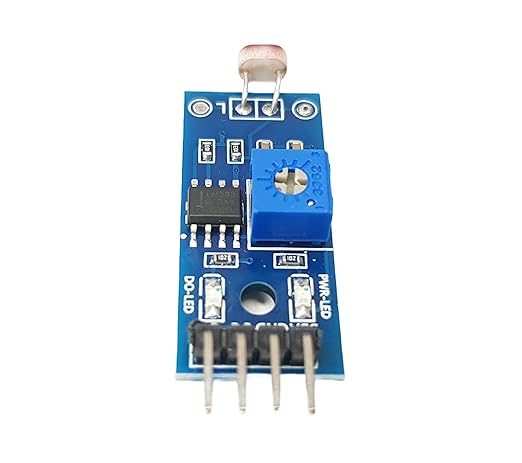
Digital Light Sensor for Arduino, ESP32, ESP8266, Raspberry Pi, 4 Pieces
Item #:
209872817
BHD 6
Price Details
Excluding Shipping & Custom charges ( Shipping and custom charges will be calculated on checkout )
*All items will import from US
In stock
 Imported from USA store
Order now and get it around Sunday, September 06
Secured transaction
Ubuy works hard to protect your security and privacy. Our advanced payment security system ensures confidentiality by encrypting your information during transmission using AES (Advanced Encryption Standards) and SSL (Secure Socket Layer) protocols. Your payment details are 100% secure as we do not share your payment details with third party sellers.
Our Top Logistics Partners


Unlock the power of light with our adjustable Digital LDR Photosensitive Light Sensor Module!

Fast
Shipping

Free
Return*

Secure Packaging

100% Original Products

PCI DSS Compliance

ISO 27001 Certified




Note: Step Down Voltage Transformer required for using electronics products of US store (110-120). Recommended power converters Buy Now.


What Stands Out
Wide Compatibility
Works seamlessly with Arduino, ESP32, ESP8266, and Raspberry Pi, making it versatile for various projects and user skill levels.
High Sensitivity
Designed to detect minimal light changes, ensuring accurate readings in diverse environments, which is essential for reliable automation and monitoring applications.
Cost-Effective Bundle
Includes four sensors at an economical price, offering exceptional value for hobbyists and professionals alike, facilitating bulk projects without breaking the bank.
Product Details
Product Technical Details
| Package Dimensions | 4.06 x 3.07 x 0.75 inches |
| Item Weight | 0.634 ounces |
| Manufacturer | DIYables |
| Item model number | DIY-LIGHT-SENSOR-DO-4 |
Who Should Buy?

-
Hobbyist Projects
Ideal for electronics enthusiasts experimenting with light-sensitive applications across various microcontrollers and platforms.
-
Education Purposes
Great for students learning about sensors, circuits, and programming with Arduino or Raspberry Pi in practical labs.
-
Light Automation
Useful for DIY home automation projects, such as controlling lights or garden systems based on ambient light levels.

-
Low-Light Accuracy
Not suitable for applications requiring high precision in extremely low light conditions, as response may be insufficient.
Product Description
Have any Query? Chat with us
Customer Questions & Answers
-
Question:
What is a Digital Light Sensor and how does it work?
Answer: A Digital Light Sensor is a device that measures light intensity and converts it into a digital signal that can be easily processed by microcontrollers like Arduino, ESP32, ESP8266, or Raspberry Pi. It typically works using photodiodes combined with analog-to-digital converters (ADCs) to provide precise measurements. This allows for applications ranging from ambient light measurement in smart buildings to automatic brightness adjustments in electronic devices. -
Question:
What are the applications of using a Digital Light Sensor?
Answer: Digital Light Sensors have diverse applications, including in smart lighting systems, automatic blinds and curtains, and environmental monitoring. For example, they can be used in a smart home system to adjust window shades based on the sunlight entering the room, thereby optimizing energy use. Additionally, they're often utilized in educational projects and DIY electronics to teach light sensing principles and programming. -
Question:
Can I use a Digital Light Sensor with my Raspberry Pi?
Answer: Yes, a Digital Light Sensor can be effectively used with a Raspberry Pi. You'll need to connect the sensor to the GPIO pins using specific libraries that will allow the Pi to read the sensor data. This setup can enable you to create projects like automated lighting systems or weather stations that can respond to changing light conditions, making it a versatile component for your projects. -
Question:
Is coding required to use a Digital Light Sensor?
Answer: Yes, coding is typically required to utilize a Digital Light Sensor effectively. You will need to write a program that reads the sensor’s output and processes the data accordingly. Libraries are available for platforms like Arduino or Raspberry Pi that simplify this process. With some basic programming knowledge, you can develop applications that respond to light levels, such as adjusting LED brightness based on ambient light. -
Question:
How do I connect a Digital Light Sensor to my ESP32?
Answer: To connect a Digital Light Sensor to an ESP32, you'll first need to set up the GPIO connections according to the sensor’s specifications. After the physical connection, you will use the Arduino IDE or other development environments to upload code that reads the light level. A common project could involve using the sensor to control an LED based on the detected light intensity. -
Question:
What type of power supply is needed for the Digital Light Sensor?
Answer: Most Digital Light Sensors require a low-voltage power supply that falls within the range of 3.3V to 5V, which is typically provided by the board you’re using, such as Arduino, ESP32, or Raspberry Pi. This makes them ideal for low-power applications. Ensure that the power supply can offer a stable connection to avoid inaccurate readings during operation. -
Question:
What advantages do Digital Light Sensors offer compared to analog sensors?
Answer: Digital Light Sensors provide several advantages over analog sensors, mainly in terms of accuracy and ease of integration with digital systems. They output data in digital form, which is less prone to noise and interference. Furthermore, these sensors can be easily interfaced with microcontrollers for real-time data processing, making them suitable for sophisticated applications like smart home automation. -
Question:
Can I use multiple Digital Light Sensors simultaneously?
Answer: Yes, you can use multiple Digital Light Sensors at the same time. However, you should ensure that each sensor is assigned to a unique GPIO pin on your microcontroller. This can enable comprehensive light monitoring in different areas of a room or a variety of environments. For instance, you might set up sensors in different spots to optimize natural lighting in a workspace. -
Question:
What is the difference between a Digital Light Sensor and a photoresistor?
Answer: The primary difference between a Digital Light Sensor and a photoresistor lies in their output. A Digital Light Sensor provides a digital signal that is processed directly by microcontrollers, while a photoresistor provides an analog signal. This means that Digital Light Sensors are generally easier to implement in digital systems, allowing for more complex applications and precise readings. -
Question:
Where can I buy Digital Light Sensor for Arduino, ESP32, ESP8266, Raspberry Pi, 4 Pieces?
Answer: You can buy Digital Light Sensor for Arduino, ESP32, ESP8266, and Raspberry Pi from Ubuy in Bahrain. Ubuy offers a variety of electronic components, including this digital sensor set, ensuring you have access to quality products for your projects.
DIYables Single Board Computers DIY-LIGHT-SENSOR-DO-4 Editorial Review
No editorial reviews found
Customer Reviews & Ratings
25 customers ratings
-
5 Star
71%
-
4 Star
19%
-
3 Star
10%
-
2 Star
0%
-
1 Star
0%
Review this product
Share your thoughts with other customers
Pros
- Accurate light detection
- Easy to integrate with projects
- High compatibility with devices
- Good value for multiple units
- Compact and lightweight design
Cons
- Requires external power source.
Platform Trust & Buyer Confidence

MB
Maryam
Verified buyer
“The order arrived fast and in perfect condition”
2 June 2026 · via Trustpilot
T
trusttaker
Verified buyer
“I loved it. That was my second order, and I am already thinking of placing a third order.”
16-Jul-26 · via Trustpilot
HA
Haitham
Verified buyer
“Trusted merchant”
11 July 2026 · via Trustpilot
MA
Mohammad
Verified buyer
“Excellent quality and very fast delivery, I really appreciate your service, when you work good I will appreciate that, I am very satisfied , thank you”
13 June 2026 · via Trustpilot
LA
Lulwa
Verified buyer
“I like the package arrived safely”
17 June 2026 · via Trustpilot
Secure Checkout
Global Delivery
Easy Returns
Genuine Products
Product Price History
Important information
- Limitations : For products shipped internationally, please note that any manufacturer warranty may not be valid; manufacturer service options may not be available; product manuals, instructions, and safety warnings may not be in destination country languages; the products (and accompanying materials) may not be designed in accordance with destination country standards, specifications, and labeling requirements; and the products may not conform to destination country voltage and other electrical standards (requiring use of an adapter or converter if appropriate). The recipient is responsible for assuring that the product can be lawfully imported to the destination country. When ordering from Ubuy or its affiliates, the recipient is the importer of record and must comply with all laws and regulations of the destination country.
- Not all the products listed on Ubuy are for sale, as Ubuy is a global search engine. Products are subject to export/trade regulations.
BHD 6
Order now and get it around Sunday, September 06
This item is not restrict in my country.(Please click on above link if this item is not restrict in your country, So our team will review and allow.)
QTY:
Secured transaction
PCI DSS compliant and ISO 27001:2022 certified, with encrypted payments and full buyer protection on every order.
Our Top Logistics Partners
Fastest cross-border delivery
Features & Benefits
- Compatible with Arduino, ESP32, ESP8266, and Raspberry Pi.
- Adjustable triggered threshold using built-in potentiometer.
- Offers both Digital (LOW/HIGH) and Analog output options.
- Operates on a supply voltage of 3.3 - 5V DC.
- Includes tutorials for easy setup with popular microcontrollers.
- Ideal for various lighting detection and automation projects.
Ubuy Assurance
Experience worry-free shopping with 100% original products, PCI DSS-compliant payment security, ISO 27001-certified data protection, the fastest cross-border delivery, free returns *, and secure packaging on every order.